If you are starting a business, trying to attract more customers, or planning to run Google Ads, you have probably wondered whether you need a landing page or a complete website.
Both can help your business establish an online presence, but they serve different purposes. Choosing the wrong one could mean spending money on features you do not need yet or missing opportunities to convert potential customers.
For example, a business running Google Ads for wedding photography in Nigeria may benefit from a focused landing page that showcases its services and encourages visitors to make enquiries. A company offering several services across different locations may need a complete website to explain its offerings, build trust, and attract customers through search engines.
So, which option makes more sense for your business?
In this guide, we will explain the differences between a landing page and a website, when to use each one, how they work with Google Ads, and what Nigerian business owners should consider before making a decision.
What Is a Landing Page?
A landing page is a standalone web page designed around a specific goal. That goal could be generating enquiries, selling a product, collecting leads, encouraging bookings, or getting visitors to sign up for an offer.
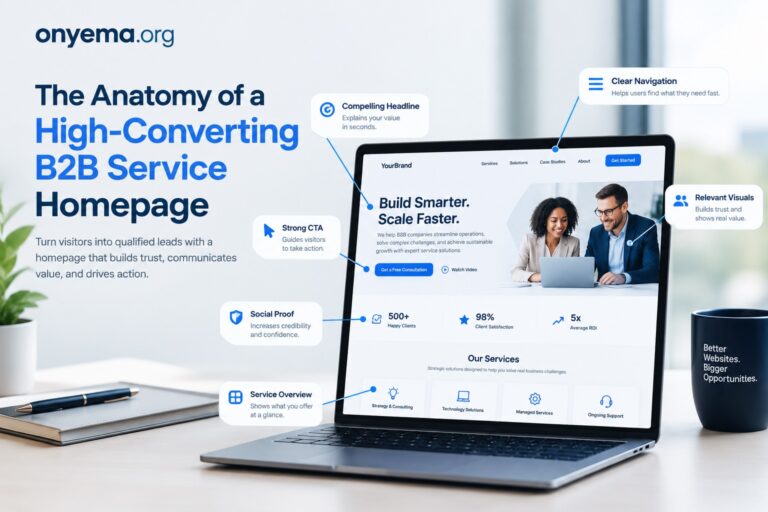
Unlike a typical business website, which may contain several pages and navigation options, a landing page usually focuses on one primary action.
For example, imagine you run an event photography and videography business in Nigeria. You decide to advertise your wedding coverage services on Google.
Instead of sending everyone to a general homepage, you create a page specifically for wedding photography and videography.
The page might include:
- A clear headline describing your wedding coverage service.
- Photos and videos from previous events.
- An explanation of what your packages include.
- Testimonials from previous clients.
- Your service locations.
- A prominent button to request a quote or make an enquiry.
Everything on the page is designed to help a potential customer understand your offer and take the next step.
A landing page does not have to be a separate domain. It can exist as a page on your existing website, such as yourbusiness.com/wedding-photography/.
The important distinction is its purpose, not its URL.
What Is a Website?
A website is a collection of connected web pages that provide information about your business, products, services, or organisation.
A typical business website may include:
- Homepage: Introduces your business and directs visitors to important information.
- About page: Explains who you are, what you do, and why customers should trust you.
- Services or products page: Describes what you offer.
- Contact page: Provides ways for customers to reach you.
- Blog: Publishes useful articles that can attract visitors through search engines.
- Portfolio or case studies: Demonstrates your experience and previous work.
The exact structure depends on your business.
For example, a Nigerian digital agency offering website development, SEO, Google Ads management, and social media marketing may need separate pages for each service.
This allows potential clients to explore the agency, understand its expertise, compare its services, and decide whether to make an enquiry.
A website can also support long-term marketing through search engine optimisation (SEO), content marketing, customer education, and other activities.
Unlike a landing page focused on one specific conversion goal, a business website can serve several purposes at the same time.
Landing Page vs Website: What Is the Difference?
Although a landing page is technically a type of web page and can form part of a website, the two terms are often used differently in marketing.
Here is how they compare.
| Feature | Landing page | Full website |
|---|---|---|
| Primary purpose | Drive a specific action | Support multiple business goals |
| Structure | Usually one focused page | Multiple connected pages |
| Navigation | Often minimal | Usually includes site navigation |
| Marketing focus | One offer, audience, or campaign | Multiple services, products, and audiences |
| Google Ads | Useful for focused campaigns | Useful when visitors need more information |
| SEO | Can target a specific search intent | Can target a wider range of topics and searches |
| Content | Focused on one offer | Can include services, articles, portfolios, and more |
| Best suited for | Lead generation, promotions, and specific offers | Long-term online presence and broader business needs |
Neither option is automatically better. The right choice depends on what you want visitors to do and how much information they need before making a decision.
When Does Your Business Need a Landing Page?
A landing page is particularly useful when you want to achieve a clearly defined marketing objective.
1. You are running Google Search Ads
Suppose you offer website design services in Lagos and launch a Google Ads campaign targeting people searching for website designers.
You could send visitors to your homepage, but that page might discuss all your services, introduce your company, and contain several unrelated links.
A dedicated landing page can focus entirely on website design.
It can explain your process, showcase previous projects, outline your packages, and encourage visitors to request a quote.
This creates a more direct connection between the search that triggered your ad, the promise made in the advertisement, and the information on your page.
However, a landing page does not automatically guarantee cheaper clicks or better Google Ads performance. Your keyword relevance, ad quality, offer, audience, and landing page experience all matter.
2. You want to generate leads quickly
If your immediate goal is to collect enquiries from potential customers, a landing page may be all you need to start testing your offer.
For example, a business providing air conditioner installation in Abuja could create a page with a service description, coverage area, customer reviews, and a request-a-quote form.
Visitors would not have to navigate through several pages before finding the information they need.
You can then measure how many visitors submit enquiries and how many of those enquiries become paying customers.
3. You are promoting a specific product or offer
An online store launching a new skincare product might create a dedicated campaign page that highlights the product’s benefits, price, usage information, reviews, and purchase button.
Similarly, a training company promoting a particular workshop could use a landing page to explain the course, show the date and price, and collect registrations.
In both cases, the page has a specific objective rather than trying to represent every part of the business.
4. You want to test a business idea
You do not always need to build a large website before testing whether people are interested in your offer.
A simple landing page can help you measure interest by collecting enquiries, sign-ups, or pre-orders where appropriate.
For instance, if you are considering launching a new service for small businesses in Nigeria, you could create a page explaining the offer and invite interested businesses to request more information.
The response can help you decide whether to invest in a larger website or expand the service.
Make sure the page accurately represents what is available. If a service is not yet operational, be transparent about its status rather than presenting it as an established offering.
When Does Your Business Need a Full Website?
A complete website becomes more valuable when your business needs to provide broader information, serve different audiences, or build a lasting online presence.
1. Your business offers multiple services
Imagine you run a company that provides photography, videography, livestreaming, drone coverage, and event equipment rental.
A single landing page might struggle to explain every service in sufficient detail, especially if each service attracts a different audience.
A full website allows you to create dedicated pages for each offering.
Someone looking for livestreaming services can visit the relevant page, while a customer interested in wedding photography can explore a separate portfolio.
This structure also makes it easier to direct visitors from different advertising campaigns to the most relevant service pages.
2. You want to attract customers through Google Search organically
If you want potential customers to discover your business without clicking a paid advertisement, a website with useful, relevant pages can support a long-term SEO strategy.
For example, a Nigerian accounting firm could publish service pages about bookkeeping, tax consulting, payroll management, and business registration assistance, alongside helpful articles that answer questions potential clients search for.
Each useful page creates another opportunity to appear for a relevant search query.
However, having more pages does not automatically lead to more traffic. The content must be useful, relevant, technically accessible to search engines, and competitive for the searches you want to attract.
A landing page can also rank organically. The advantage of a broader website is that it gives you more room to cover different topics and customer needs.
3. Customers need to research your business before buying
Some purchases require more consideration than others.
A customer buying a relatively inexpensive household item may need only basic product information. Someone hiring a web development agency, investment consultant, or corporate event production company may want to examine your experience, services, previous projects, and business details before making contact.
A full website gives you room to answer these questions.
It can also include policies, frequently asked questions, detailed service descriptions, case studies, and other information that helps customers make informed decisions.
4. You want to build a recognisable brand
A website can serve as your business’s central online presence.
You can use it to communicate your brand identity, explain your values, showcase your work, publish useful content, and direct customers to your preferred contact channels.
Over time, you can also expand it with additional services, online bookings, ecommerce functionality, customer accounts, or other features as your business grows.
This makes a website a useful long-term investment for businesses with broader plans.
Can You Run Google Ads With Just a Landing Page?
Yes. You do not necessarily need a full, multi-page website before you can run Google Search Ads.
A well-built landing page can support a campaign if it meets Google’s applicable advertising requirements and gives visitors a clear, useful destination.
For example, a business offering plumbing services in Port Harcourt could advertise searches related to emergency plumbing, pipe repairs, and plumbing installations.
A focused page could explain the services, coverage area, availability, and how to request assistance.
Before launching, make sure your landing page:
- Clearly identifies the business behind the offer.
- Accurately describes the advertised service or product.
- Works properly on mobile devices.
- Loads reliably and provides a good user experience.
- Includes clear contact information and relevant trust signals.
- Has a straightforward way for visitors to complete the intended action.
- Complies with Google’s advertising policies and any applicable legal requirements.
You should also have an appropriate privacy notice when collecting personal information through forms or other tracking technologies.
Google Ads does not require every advertiser to have a large website. However, the destination must be legitimate, functional, relevant to the ad, and compliant with the policies that apply to the campaign.
Which Is Better for Google Ads: A Landing Page or a Website?
The answer depends on what you are advertising and where you send visitors.
Consider these examples.
Scenario 1: A wedding photographer running a campaign for wedding coverage
A dedicated wedding photography landing page is a strong option because it can showcase relevant work, explain the offer, and encourage enquiries.
Scenario 2: A web design agency advertising several services
A full website with separate pages for web design, SEO, ecommerce development, and maintenance may be more suitable. Each campaign can direct visitors to the page that matches their search.
Scenario 3: An online store advertising one product
A dedicated product page may be sufficient. It can display the product details, price, delivery information, and purchase options.
Scenario 4: A new business testing demand for one service
A landing page can be a practical starting point. If the business expands, it can later build a broader website without necessarily abandoning the original page.
The key principle is to send visitors to the most relevant destination for their search and intended action.
Do not force every visitor to use your homepage when a more specific page would answer their needs better.
How Much Does a Landing Page or Website Cost in Nigeria?
There is no single fixed price for either option. Costs vary depending on the developer, the complexity of the project, the design requirements, and the features involved.
A landing page may cost less because it usually requires fewer pages and a narrower scope of work. However, a highly customised landing page with advanced integrations, animations, booking functionality, or conversion tracking can cost more than a simple multi-page website.
Similarly, a basic business website may be relatively affordable, while a larger website with ecommerce, membership features, booking systems, or custom integrations requires more development work.
When comparing quotations from Nigerian web designers or agencies, consider the following:
- Design quality and mobile responsiveness.
- Number of pages included.
- Copywriting and image sourcing.
- Domain and hosting arrangements.
- Contact forms and integrations.
- Analytics and conversion tracking.
- SEO setup and technical configuration.
- Security, maintenance, and ongoing support.
Ask for a clear breakdown of what is included rather than choosing solely based on the lowest price.
Also consider the cost of maintaining the site after launch. A website is not a one-time expense if it requires regular updates, hosting renewals, security monitoring, or ongoing content work.
Can You Have Both a Website and Landing Pages?
Absolutely. In fact, this is often the most practical approach for an established business.
Your main website provides information about your business, while dedicated landing pages support specific advertising campaigns, promotions, or lead-generation activities.
For example, a Nigerian digital marketing agency might have a main website with its homepage, about page, services, portfolio, blog, and contact page.
Within that website, it could create separate landing pages for:
- Google Ads management.
- Website design for small businesses.
- Ecommerce website development.
- SEO services for local businesses.
Each landing page can focus on a particular offer and audience.
When the agency launches a campaign for Google Ads management, it can direct visitors to that specific page rather than making them navigate through the entire website.
The same approach works for event companies, professional service providers, ecommerce businesses, and many other industries.
You do not need to choose between a website and landing pages forever. You can start with what your business needs now and expand as your marketing strategy develops.
Landing Page vs Website: Which Should Your Business Choose?
Use this quick guide to identify the most suitable starting point.
Choose a landing page if:
- You are promoting one main service or product.
- Your immediate goal is to generate leads, bookings, or sales.
- You are launching a focused Google Ads campaign.
- You want to test demand before investing in a larger site.
Choose a full website if:
- You offer multiple products or services.
- You want to publish content and build an organic search presence.
- Customers need detailed information before making a decision.
- You want a central online home for your brand.
Consider both if:
- You want to build a long-term online presence and run focused campaigns.
- Different services attract different audiences.
- You need a central brand website with dedicated pages for advertising.
Ultimately, the right choice depends on your business goals, budget, and customers’ needs.
Final Thoughts
A landing page and a full website are not competing solutions. They are different tools that can work together to help your business attract and convert customers.
If you need to promote one specific offer or generate enquiries from a focused Google Ads campaign, a landing page may be the right place to start.
If your business offers multiple services, needs a broader online presence, or wants to build a long-term content and SEO strategy, a full website may be the better investment.
For many Nigerian businesses, the most effective long-term approach is to build a useful business website and create dedicated landing pages for the services or products they want to promote.
Whatever you choose, focus on making it easy for potential customers to understand what you offer, trust your business, and take the next step.
A website or landing page should not simply look good. It should help your business achieve a clear objective.